Know what is happening in the concrete.
Record concrete temperature. Use your mixture’s calibration to estimate strength, then compare with the required tests.
Explore SensyCast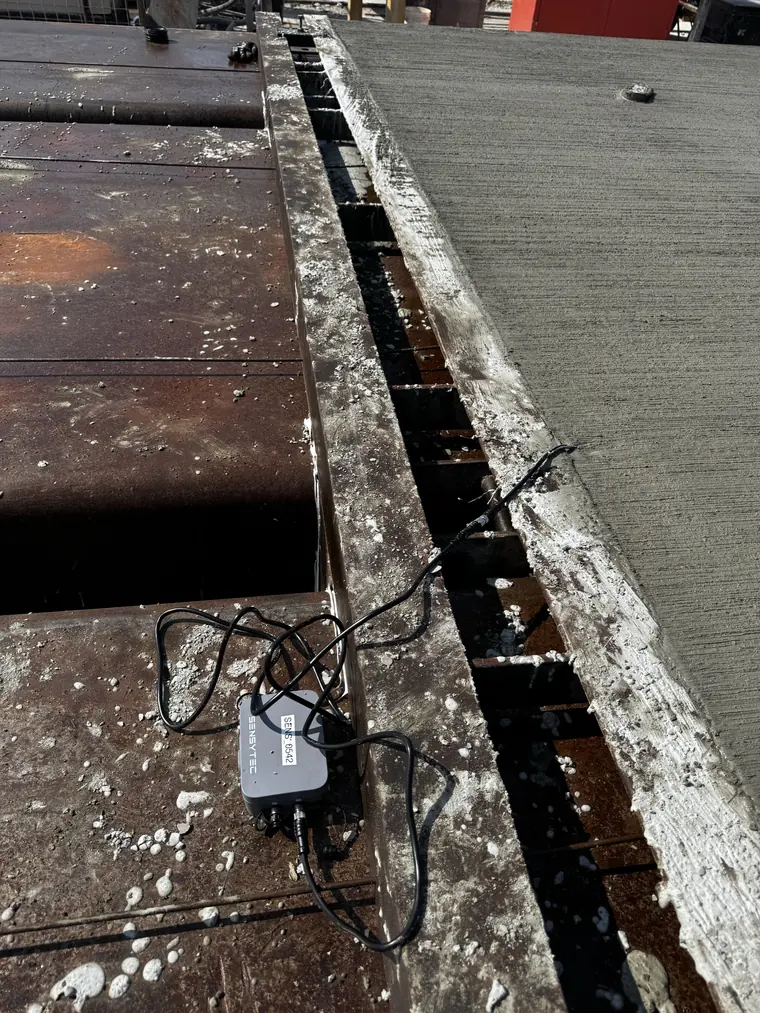
Precast & prestressed · Plant trial guide
See what each part does. Then plan a trial around the decision your plant needs to make.
Record concrete temperature. Use your mixture’s calibration to estimate strength, then compare with the required tests.
Explore SensyCastUse the selected bed reference to guide companion-cylinder curing. Compare temperature tracking and cylinder results.
Explore SensyCure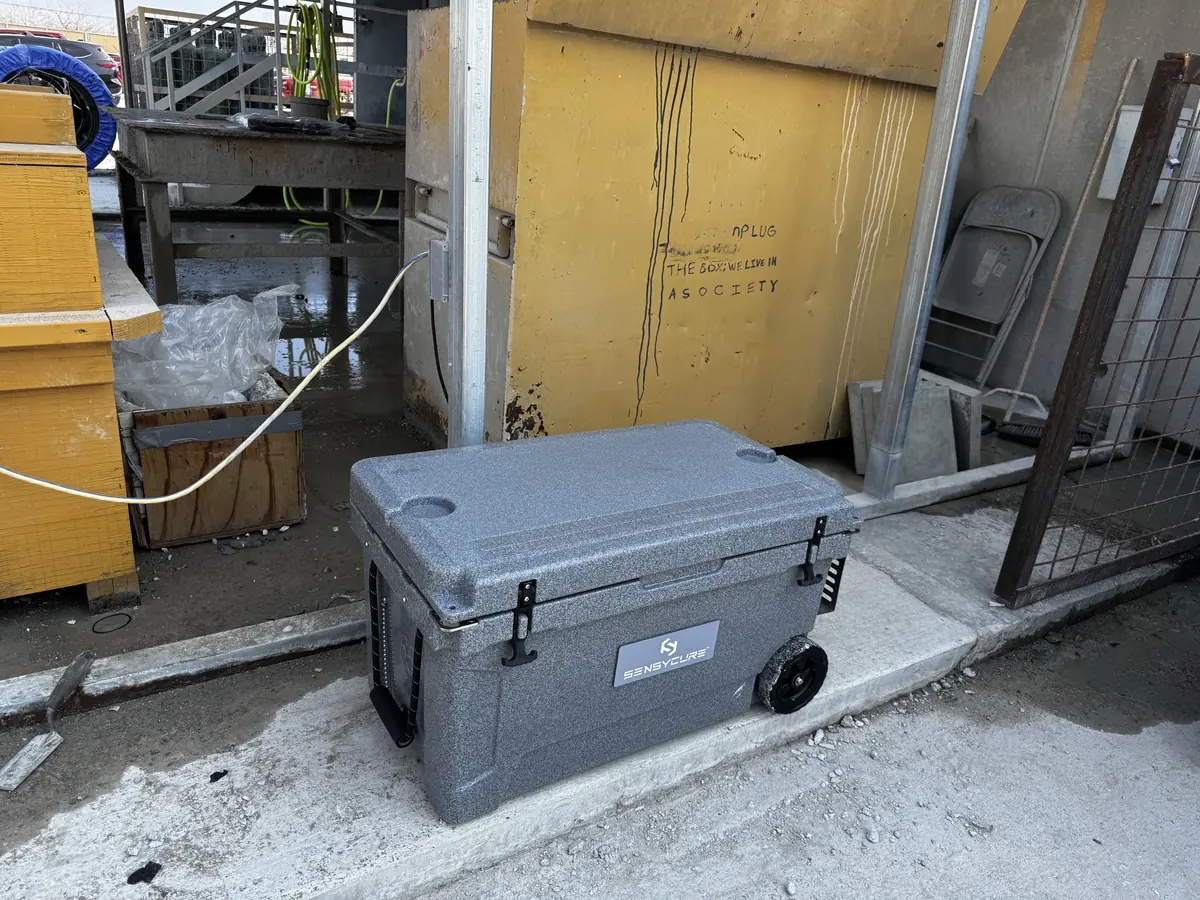
Review measurements, cylinder tests and production records. Confirm the SensyHub QC workflow during your demonstration.
Explore SensyHub QC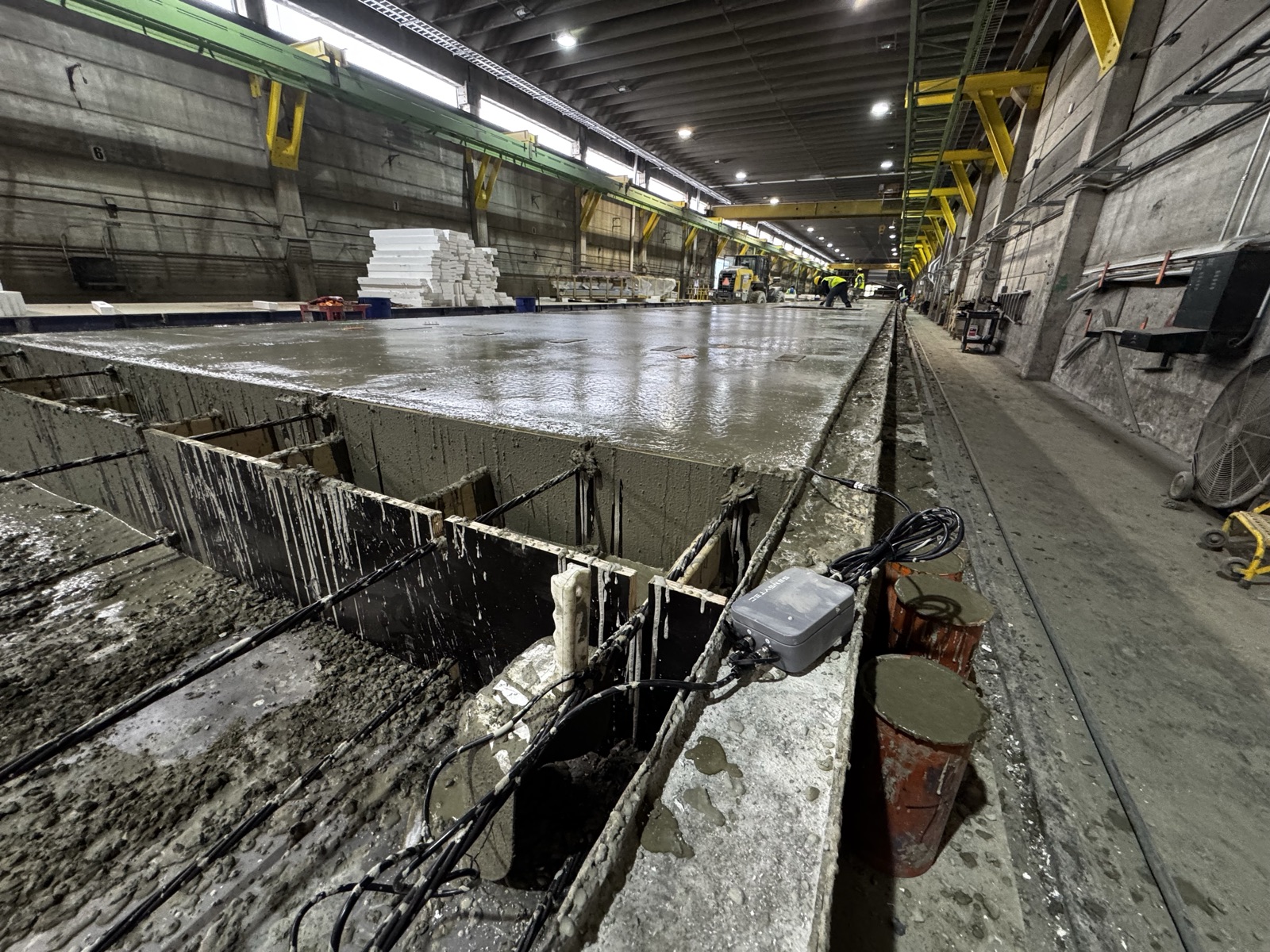
Illustrative sequence, not a wiring diagram or a release approval. Choose the products your trial needs; confirm connectivity and integration in the scope.
The same idea, in a short film
A plant trial starts with one question. Can your team use concrete measurements to make better production decisions?
First, SensyCast records concrete temperature. With a calibration for your mixture, the temperature history supports strength estimates. Compare those estimates with the required cylinder tests.
Next, SensyCure uses the selected concrete temperature reference to guide companion-cylinder curing. During the trial, compare the temperature records and cylinder results.
Finally, review the measurements, tests, and production records with your quality team. Confirm the SensyHub QC workflow in your demonstration. Your approved release procedure still governs the decision. Start with one plant trial.
Open only the part your team wants to review.
A precast monitoring trial is a planned evaluation of how temperature records, calibrated strength estimates, companion-cylinder tests and QC documentation fit your plant’s approved production procedure. Agree on the baseline, test plan, responsibilities and acceptance criteria before the first trial pour.
The ASTM C1074 maturity practice estimates strength using temperature history and a mixture-specific relationship. Supplemental strength evidence remains necessary. Agree with the responsible team on the calibration and verification procedure for the intended use.
A trial does not have to include every product. Select the components that answer your plant’s question and demonstrate how the proposed configuration will work together.
Concrete temperature and strength estimation
Check probe placement, signal coverage, timestamps, data gaps and the mixture calibration used for any strength estimate. Confirm which components are recoverable and which are consumables.
Companion-cylinder temperature matching
Evaluate how the chamber follows the chosen bed reference. Record average and maximum temperature differences, specimen handling and the associated cylinder break results.
Production records and review
Demonstrate how the proposed workflow associates a pour, mixture, member, sensors, cylinders and reviewer. Confirm available fields, permissions and exports against an actual example during the demonstration.
Include SensyHub and any required connectivity in the scope. Ask for a demonstration of each workflow and integration you expect to use; document what is included, what requires configuration and what is outside the quoted scope.
Explore an illustrative plant workflow to see the decisions and records a demonstration should cover.
These are summaries of Sensytec’s published case studies. They are observations from specific deployments, not a performance guarantee for a new plant. Use them to decide what to verify in your own trial.
The February 17, 2026 demonstration used SensyCast and SensyCure on a Double-T pour with a 3,500 psi release target. The published comparison reports:
| Time after pour | Cylinder average (psi) | Estimated strength (psi) | Reported difference |
|---|---|---|---|
| 5h 43m | 2,177 | 2,026 | −6.9% |
| 7h 43m | 3,968 | 3,609 | −9.0% |
| 9h 43m | 4,431 | 4,550 | +2.7% |
The case study reports the estimate reaching 3,500 psi at 7 hours 33 minutes, compared with a stated usual cylinder schedule of 10 to 11 hours. That estimated crossing is separate from a cylinder test or an authorized release. Ask to review the calibration basis, break records and approval procedure before using the comparison to set your own target.
In the published two-day cold-weather insulated-wall-panel trial, Day 2 placed the SensyCast reference probe and the comparison system’s thermocouple side by side in the same concrete. SensyCure cylinders were wrapped in plastic to retain moisture.
| Day 2 temperature metric | SensyCure | Legacy heated-mold system |
|---|---|---|
| Average gap versus bed | 0.79°F | 6.8°F above bed |
| Maximum gap versus bed | 5.4°F | 27.4°F above bed |
| Time within 1°F of bed | 72.1% | 5.5% |
The reported average cylinder-break strengths, each from two cylinders, were 3,121 psi for SensyCure and 3,792 psi for the comparison system. The stated release requirement was 3,500 psi. Those are specimen results, not a direct measurement of the panel’s in-place strength. Day 1 used different reference locations and was not the same controlled comparison. Your evaluation should preserve the full temperature record and specimen conditions.
Sensytec’s published Con-Fab case study reports an 11-hour reduction in demolding time, material savings of up to 32% and a 50% reduction in cylinder testing for a prestressed manufacturing deployment. The page provides a summary rather than the underlying production dataset.
Before applying those figures to your business case, request the comparison period, production baseline, mixture changes and applicable testing approvals. Keep required tests in the trial plan; a reported reduction at another plant does not authorize one at yours.
Use plant-approved targets rather than a universal pass threshold. Review representative pours and operating conditions, including any interruptions, before deciding whether to expand.
| Evaluation area | Evidence to review | Agree before the trial |
|---|---|---|
| Measurement and connectivity | Location record, timestamps, complete temperature history and any missing data. | Required coverage, acceptable data gaps and an interruption response. |
| Strength estimates | Calibration version and estimates paired with the required cylinder tests. | Comparison method, acceptance limits and reviewer. |
| Match curing | Bed and cylinder traces, average and maximum tracking gap, specimen conditions. | Comparison period, allowed differences and handling procedure. |
| QC records | A traceable example connecting the pour, tests, results and approval record. | Required fields, access, export format and retention needs. |
| Production and cost | Comparable baseline and trial observations, staff time, consumables and service costs. | How savings will be calculated and which changes could distort the comparison. |
Plan for an incomplete result. If a reference reading, calibration, connection or required test is unavailable, follow the plant’s approved fallback procedure. A dashboard alert or strength estimate does not independently authorize detensioning, lifting or release.
Ask for a written scope matched to your beds, mixtures, shifts and intended decisions. Confirm each line item rather than assuming it is included in a demo or equipment price.
No. Start with the production question. SensyCast supports temperature monitoring and calibrated strength estimates, SensyCure evaluates companion-cylinder temperature matching, and SensyHub QC addresses production records. Confirm the required platform and connectivity for the selected configuration.
Plan around the mixture and conditions you intend to use. Have the responsible technical team establish or review the applicable calibration and supplemental tests. A published case study does not provide an approved calibration for your concrete.
No. Your project specification, required tests and authorized reviewer continue to govern release. Agree on any proposed procedural change with the responsible approving parties before using it in production.
Ask to trace one example from the pour and mixture through sensor records, cylinder results and review. Verify permissions, exports and the exact fields and integrations available in the proposed configuration.
The scope depends on equipment, beds, mixtures, calibration work, connectivity, training and the observations needed for review. Request a written proposal that separates equipment, setup, recurring costs and trial deliverables.
No. It is a blank planning aid. The linked case studies contain published observations; an actual QC record or export should be demonstrated and reviewed separately with the plant team.
A blank planning worksheet for your QC team. Agree on the trial before the first pour.
| Planning item | Plant notes / agreed requirement |
|---|---|
| Plant, bed / member and trial dates | |
| Trial question and current production baseline | |
| Mixture ID / revision and calibration record | |
| Sensor locations and reference method | |
| Cylinders: preparation, curing and break schedule | |
| Proposed equipment, network and power | |
| Applicable specification and required approvals | |
| Measurement and tracking acceptance criteria | |
| Required QC fields, exports and retention | |
| Missing-data / interrupted-test procedure | |
| Installation, training and support responsibilities | |
| Trial cost, consumables and recurring charges | |
| QC reviewer and release authority | |
| Review date and expansion decision criteria |
Sensytec | Planning worksheet | Guide reviewed September 11, 2026
https://www.sensytec.com/plant-trial-guide.html