Cold-weather concrete curing (ACI 306) is the protection of fresh concrete from freezing and from slow strength gain when ambient temperatures fall below 40°F, using insulated blankets, ground heaters, accelerating admixtures, and in-place temperature monitoring to verify protected concrete reaches strength before protection is removed.
- ACI 306 cold-weather rules trigger when average daily air temperature falls below 40°F for three consecutive days
- Fresh concrete must reach roughly 500 psi before it can safely freeze; below that, ice expansion can cause permanent strength loss of up to 50%
- Minimum maintained concrete temperature varies by section thickness: 55°F for thin sections, dropping to 40°F for mass pours over 72 inches
- Standard protection: heated enclosures, insulated curing blankets, hot mix water (up to 180°F), accelerating admixtures, heated forms
- Real-time wireless sensors verify in-place temperature stays above the ACI 306 minimum and confirm when protected strength has been reached
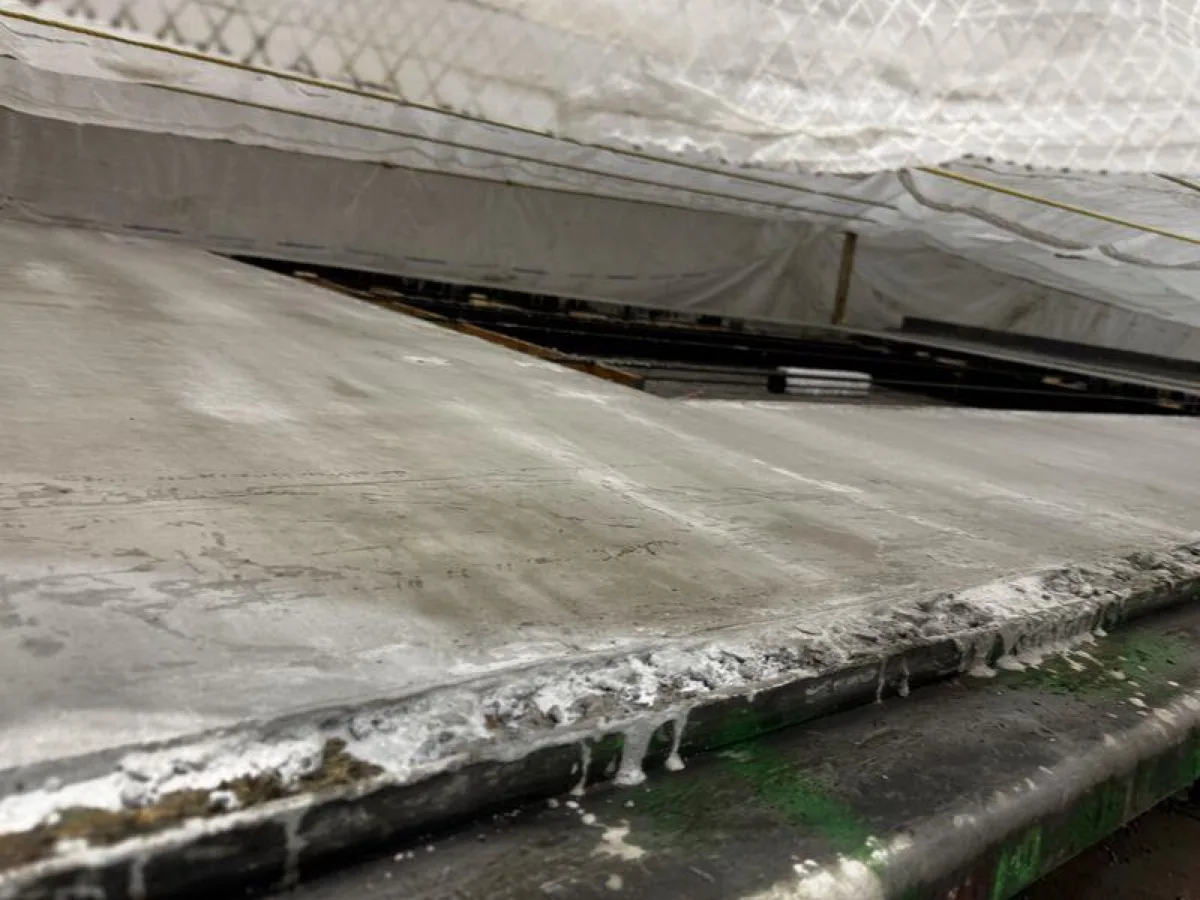
Insulated curing blankets protect a fresh prestressed bed through a cold overnight cure.
Why Cold Weather Is a Problem for Concrete
Cold ambient temperature slows concrete in three ways at once. Cement hydration nearly stops below 40°F, mix water can freeze and expand inside the still-soft paste, and the heat the concrete generates internally is lost to the environment too quickly to sustain reaction. The combination produces concrete that gains strength painfully slowly, freezes and cracks if unprotected, and may permanently lose 30 to 50 percent of its design strength.
The four risks below are the main concerns. Active heating, insulation, mix-design adjustments, and verified in-place temperature address all of them.
1. Freezing of mix water
If the concrete cools below about 25°F before it has gained roughly 500 psi compressive strength, the free water in the cement paste can freeze. Water expands ~9% when it freezes. Inside a still-plastic concrete mass, that expansion physically disrupts the developing cement paste structure. The damage is permanent — once the concrete thaws and continues hydrating, the cracked paste cannot heal. Strength loss of 30 to 50 percent is common, and the concrete is also more vulnerable to long-term durability problems.
2. Slowed strength gain
Cement hydration approximately halves in rate for every 18°F drop. A mix that reaches 4,000 psi in 7 days at 70°F may need 14 to 21 days at 40°F to reach the same strength. Job schedules built on warm-weather assumptions break: form removal slips, post-tensioning slips, the next floor cycle slips. The cost is rarely the concrete itself — it is the schedule slip cascading through the project.
3. Differential shock when removing protection
When heated enclosures are removed, the warm concrete surface meets cold air and contracts faster than the warmer interior. The temperature drop can exceed the safe rate (typically 40°F per 24 hours) and induce surface cracking. ACI 306 limits the rate of temperature drop after protection is removed to prevent thermal shock cracking.
4. Late-age durability loss
Concrete that hydrated slowly under cold conditions often has higher porosity and lower long-term durability than the same mix cured at moderate temperature. The cement paste develops a less uniform structure, with more capillary pores connecting freeze-thaw vulnerability and chloride intrusion paths. Even concrete that meets the 28-day strength may underperform in a 50-year service life if the early-age cure was poorly controlled.
What the Specs Say: ACI 306
ACI 306 (Cold Weather Concreting) is the recognized standard. Cold-weather provisions trigger when, for more than three consecutive days, the average daily air temperature is below 40°F or the air stays below 50°F for more than half of any 24-hour period. Once triggered, the placed concrete and the in-place concrete must be maintained above the minimum temperature for the section thickness and held there for the entire protection period.
Maximum mix water temperature at the plant is 180°F. Maximum aggregate temperature is 100°F to prevent flash setting when hot water and aggregate combine. The placed concrete temperature is calculated based on the proportions and temperatures of mix components.
| Section Thickness | Min Placed Temp | Min Maintained Temp |
|---|---|---|
| Less than 12 in (thin slabs, walls) | 55°F | 55°F |
| 12 to 36 in | 50°F | 50°F |
| 36 to 72 in | 45°F | 45°F |
| Over 72 in (mass pours) | 40°F | 40°F |
Maximum allowable temperature drop after protection removal is 40°F over 24 hours for sections less than 12 inches, dropping to 20°F per 24 hours for mass pours. Faster cooldown risks thermal shock cracking.
Preventing Cold-Weather Damage
Heat the mix at the plant
Hot mix water is the standard tool. ACI 306 allows water temperatures up to 180°F. To avoid flash setting, hot water is combined with aggregate before adding cement. Aggregate may also be heated with steam coils or covered stockpiles, but never above 100°F. The result is concrete that arrives at the placement above the ACI 306 minimum.
Use accelerating admixtures or higher early strength cement
Accelerating admixtures shorten setting time and increase early strength gain. Calcium chloride is the most effective and least expensive but is prohibited in reinforced concrete (corrosion risk) and most prestressed work. Non-chloride accelerators are the standard substitute. Type III (high early strength) cement, or simply increasing total cement content, achieves the same result through faster intrinsic hydration.
Insulate aggressively
Insulated curing blankets are the workhorse for slabs, walls, and many precast elements. Foam-backed tarps trap the heat of hydration inside the concrete and prevent surface freezing. For thicker sections or colder ambient temperatures, double-layer insulation, foam board on forms, or wrapping forms with blankets extends protection. Insulation alone is often enough when the concrete itself produces sufficient heat.
Add heat where insulation is not enough
Heated enclosures (tarps over the pour with portable propane, electric, or hydronic heaters) maintain temperature in extreme cold or for thin sections that lose heat fast. Heated forms (especially common in precast for prestressed beds) transfer heat directly into the concrete. Electric mats or hydronic tubing in formwork or under slabs are used on cold-region infrastructure projects. The key constraint is uniformity — uneven heating creates differential strain and can crack the concrete.
Verify what is actually happening inside the concrete
Heating, insulation, and accelerators are inputs. The output that matters is the actual in-place concrete temperature and strength gain. Real-time wireless sensors embedded in the pour stream those readings continuously. Crews can verify the concrete is staying above the ACI 306 minimum without manually probing every few hours. If a heater fails overnight or insulation slips, the alert fires before any freezing damage occurs. And the maturity calculation tells crews exactly when the concrete has reached the protected strength so heating can be safely removed.
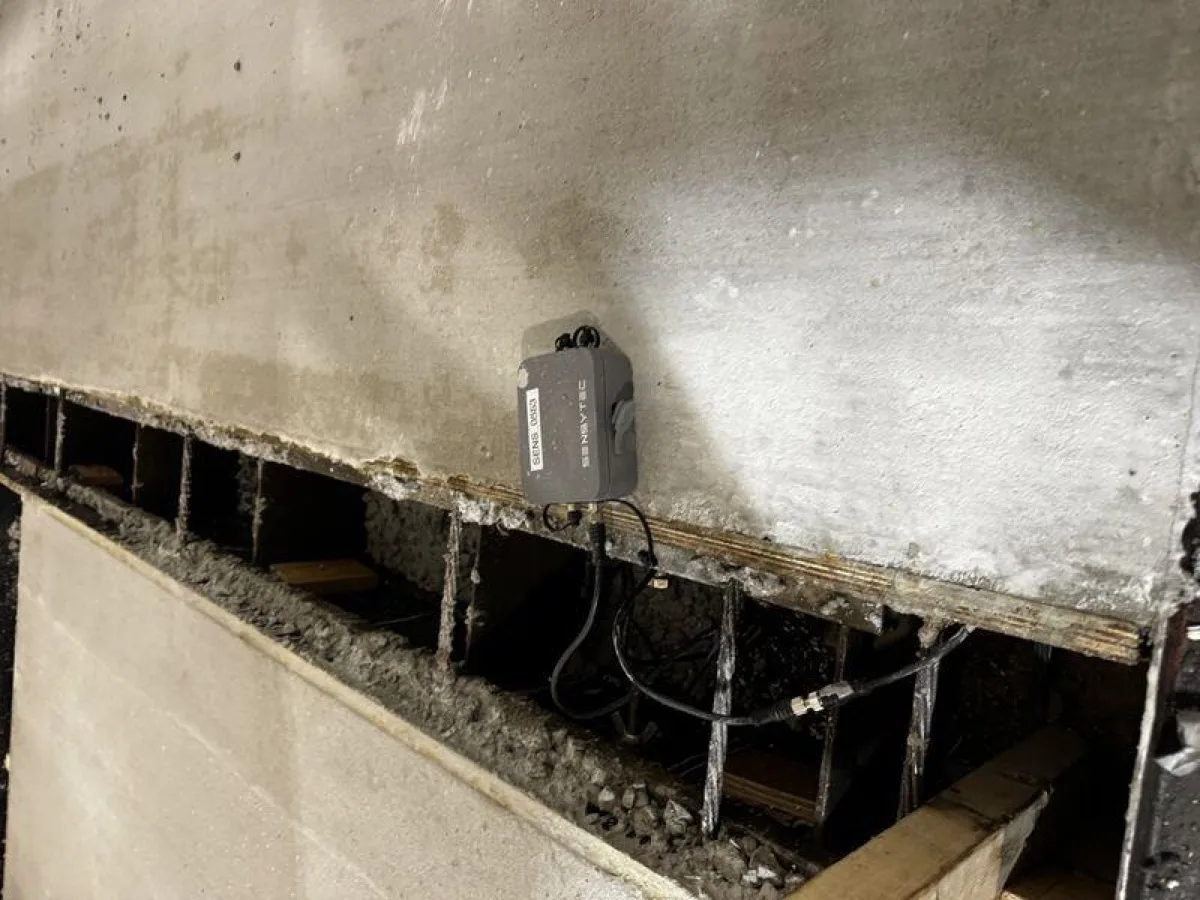
A wireless sensor inside the pour confirms the concrete is staying above the ACI 306 minimum.
How Real-Time Monitoring Closes the Cold-Weather Loop
Three things make wireless concrete sensors the right tool for cold-weather work:
- Continuous in-place temperature. Spot-checks with an infrared thermometer or surface probe miss what is happening inside the concrete. Sensors capture every reading from placement through the entire protection period.
- Threshold alerts before damage occurs. Set alarms for the ACI 306 minimum (55°F, 50°F, 45°F, or 40°F based on section). If a heater fails or insulation moves, crews get notified before the concrete cools to the freezing risk zone.
- Maturity-based protected strength confirmation. The cure period in cold weather can be twice as long as in warm weather. Real-time maturity readings tell crews exactly when the concrete has reached the strength required to remove protection — not a calendar guess.
In the recent SensyCure match-cure trial, sensors tracked an insulated prestressed wall panel through a cold overnight cure where ambient temperature dropped from 43°F to 28°F. The data confirmed transfer strength was reached and the panel was safe to detension at the scheduled morning cycle.
A Practical Cold-Weather Pour Checklist
- Day before. Check 72-hour forecast. If trigger conditions (avg daily < 40°F for 3 days) apply, activate the cold-weather plan. Reserve heaters, fuel, and curing blankets.
- Mix at the plant. Verify hot water charge. Adjust admixtures (accelerator dose, retarder removal). Calculate placed concrete temperature against the ACI 306 minimum for the section.
- Site prep. Heat formwork or rebar that has been sitting in the cold — cold steel can locally chill the surrounding concrete below the safe minimum. Pre-heat the placement area if using an enclosure.
- At placement. Take concrete temperature off the truck. Tie sensors to rebar before the pour starts so they capture the entire cure history. Confirm placed temperature is above the ACI 306 minimum for the section.
- During finishing. Work fast — cold concrete sets slower but bleed water still freezes if the surface drops below 32°F. Cover with insulated blankets immediately after final finish.
- Through the cure. Watch the live sensor curve. If the temperature drops toward the ACI 306 minimum, add heat or insulation immediately. Verify the differential between core and surface stays within spec.
- Removing protection. Confirm in-place strength has reached the protected strength via maturity reading. Limit the rate of temperature drop after protection removal (40°F per 24 hours for thin sections).
- Documentation. Export the temperature and strength record from the sensor platform for the QC binder and the cold-weather plan compliance file.
Frequently Asked Questions
What is cold-weather concrete?
ACI 306 defines cold-weather concreting as a period when, for more than three consecutive days, the average daily air temperature is below 40°F or the air temperature stays below 50°F for more than half of any 24-hour period. Below these thresholds, special precautions are required to protect fresh concrete from freezing and to ensure adequate strength gain.
At what temperature does fresh concrete freeze?
Fresh concrete is at risk of freezing damage if it cools below about 25°F before reaching approximately 500 psi compressive strength. If the mix water freezes before hydration progresses far enough, the resulting ice expansion disrupts the cement paste structure and the concrete can lose up to 50% of its design strength permanently.
What are the ACI 306 minimum concrete temperatures?
For sections less than 12 inches thick, ACI 306 requires concrete-as-placed and maintained temperature of at least 55°F. Sections 12 to 36 inches need 50°F. Sections 36 to 72 inches need 45°F. Sections over 72 inches need 40°F. The minimum temperatures apply for the entire protection period.
How do you protect concrete from cold weather?
The standard methods are heated enclosures (tarps with portable heaters), insulated curing blankets, heated forms, hot mix water (up to 180°F at the plant), accelerating admixtures, and supplementary heat from electric mats or hydronic systems. The right combination depends on ambient temperature, section thickness, and how quickly strength must be gained.
Can you pour concrete in freezing temperatures?
Yes, with proper protection. The placed concrete temperature must meet ACI 306 minimums, the mix typically uses heated water and possibly accelerating admixtures, and the concrete must be protected from freezing for the full protection period. Insulated blankets, heated enclosures, or heated forms maintain the required temperature. Many projects in northern climates pour year-round.
How do wireless concrete sensors help in cold weather?
Wireless sensors embedded in the pour stream actual in-place temperature continuously. Crews can verify the concrete is staying above the ACI 306 minimum without manually probing every few hours. If the temperature drops, an alert fires before any freezing damage occurs. Sensors also calculate maturity in real time so crews know exactly when the concrete has reached the protected strength.
What admixtures speed up cold-weather concrete strength gain?
Accelerating admixtures shorten setting time and increase early strength. Calcium chloride is the most effective and least expensive but is restricted in reinforced and prestressed concrete due to corrosion risk. Non-chloride accelerators (calcium nitrate, calcium nitrite, sodium thiocyanate formulations) are used where chloride is prohibited. Higher cement content or Type III cement also accelerates strength gain.
How long should concrete be protected in cold weather?
The protection period continues until the concrete reaches the strength required by the project specification. ACI 306 minimum is three days for normal concrete and seven days for slow-gaining mixes, but in practice the duration is set by maturity readings. Real-time sensors confirm when in-place strength has reached the threshold so heating can be safely removed.
Pouring through winter? Let's monitor it.
Real-time temperature and maturity from inside the pour. ACI 306 compliance documentation included.
Talk to an Expert