Advanced Materials
R&D Validation. Real-Time.
Validate bio-based materials, CO2-cured concrete, novel admixtures, and next-gen formulations with continuous, in-situ sensor data.
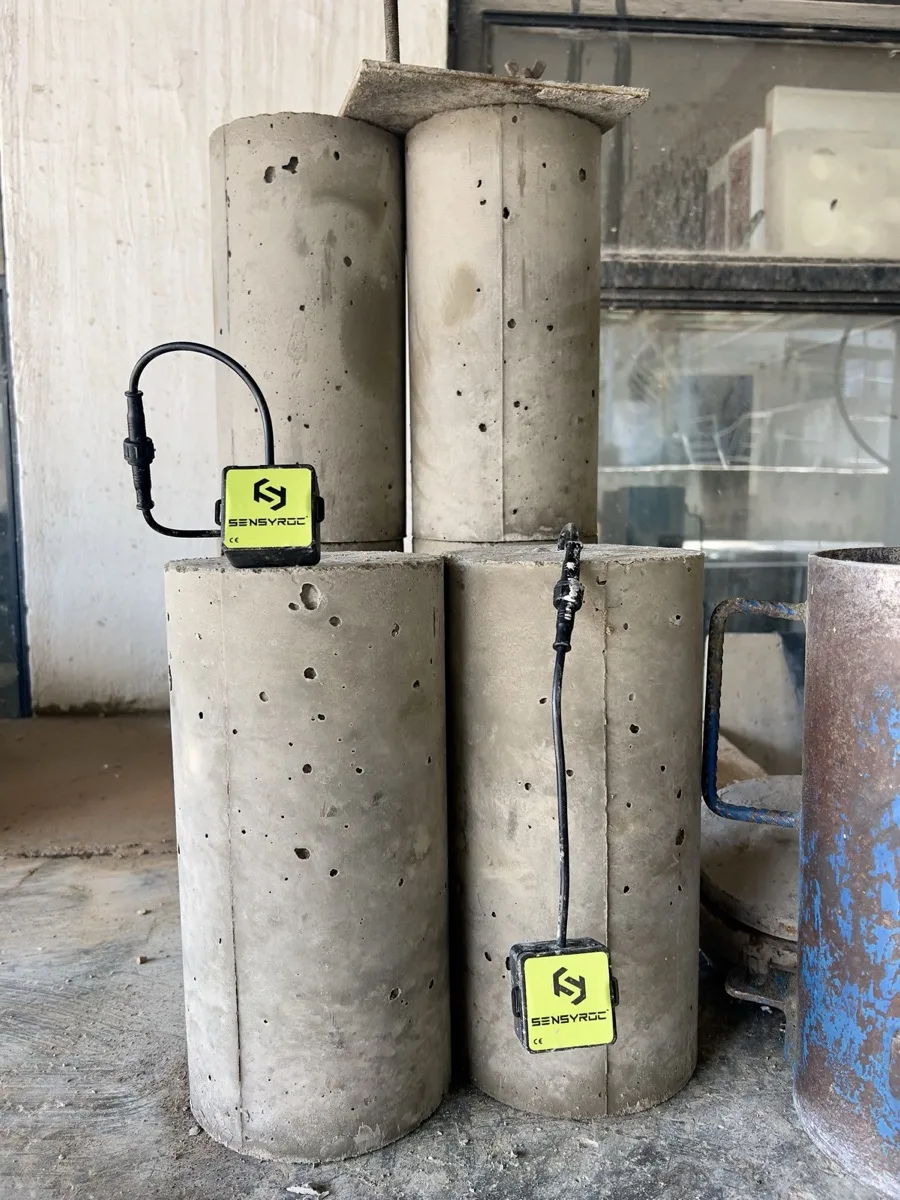
Validate bio-based materials, CO2-cured concrete, novel admixtures, and next-gen formulations with continuous, in-situ sensor data.
Novel materials need novel measurement. Sensytec sensors go beyond temperature to capture the electrical fingerprint of hydration and curing in real time.
Simultaneously measure temperature and electrical resistivity. Capture hydration kinetics, setting behavior, and strength development in one device.
No more point-in-time tests. Get continuous, high-resolution data throughout the entire curing process — from minutes to months.
Download raw CSV data or access via open APIs. Integrate with your existing analysis pipelines, MATLAB, Python, or BIM platforms.
Monitor material properties without breaking specimens. Preserve samples for additional testing while getting real-time performance data.
Validate SCM replacements, fly ash alternatives, and bio-based binders with real-time resistivity data that correlates to strength gain.
Track the carbonation curing process in real time. Measure how CO2 injection affects resistivity and strength development.
Monitor layer-by-layer strength development in 3D-printed structures. Validate structural integrity during and after printing.
Characterize non-Portland cement systems with electrical resistivity — a parameter uniquely suited to geopolymer hydration.
Compare the effects of accelerators, retarders, and plasticizers side-by-side with continuous, in-situ data from multiple sensors.
Track resistivity over weeks, months, or years. Assess long-term durability, chloride ingress risk, and material degradation.
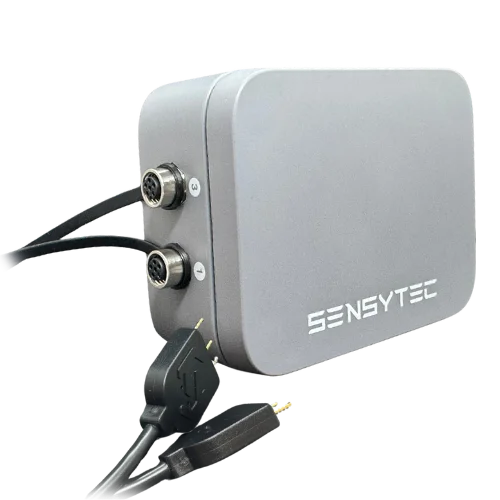
Multi-probe temperature + resistivity. Ideal for embedding in test specimens and structural elements for continuous monitoring.
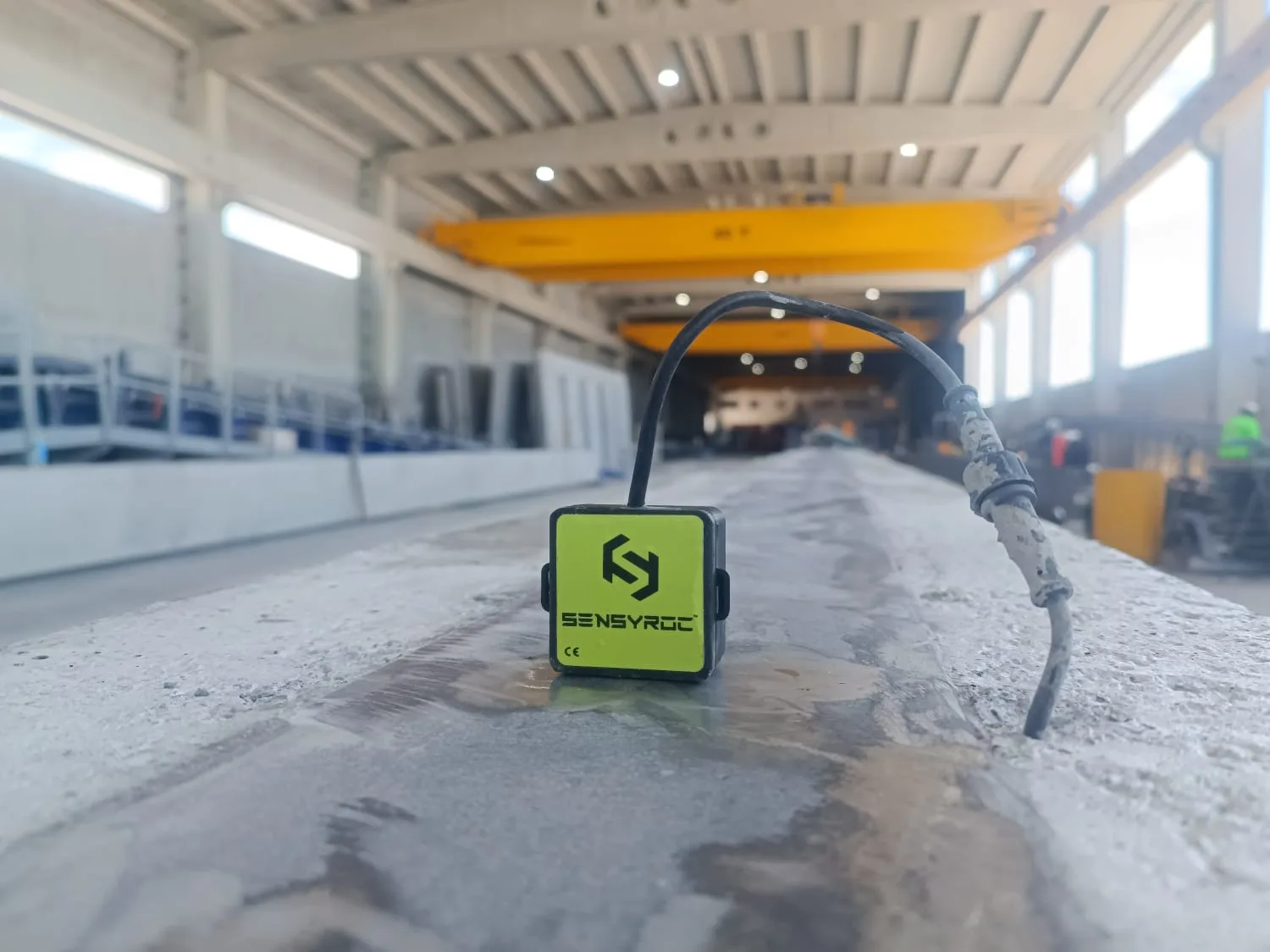
Portable wireless sensor with free iOS/Android app. Quick setup for lab experiments and field validation studies.
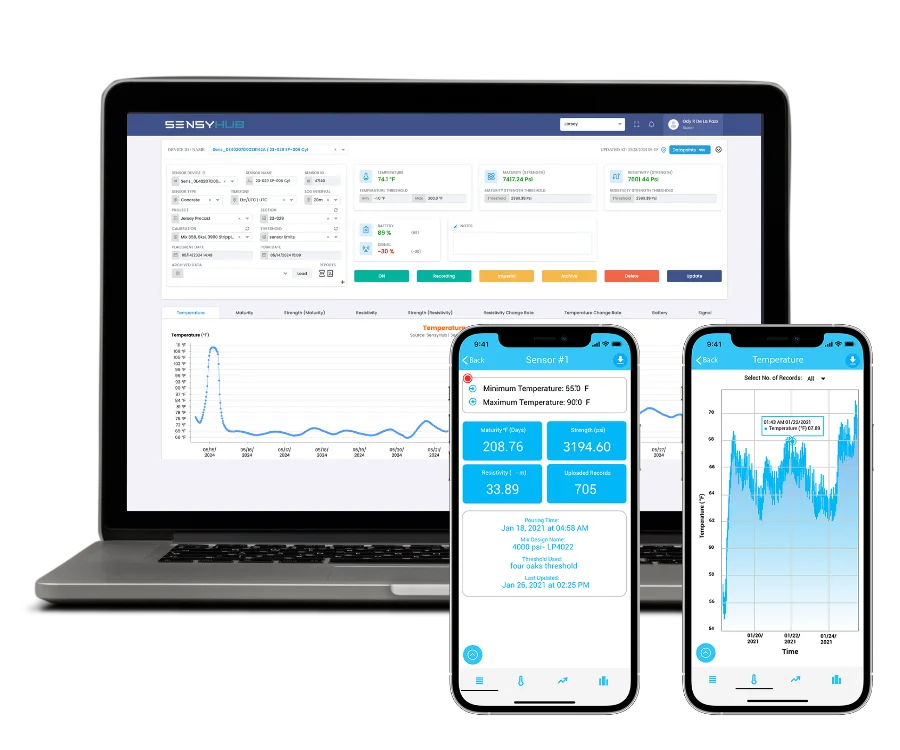
Cloud analytics with CSV export and open APIs. Compare experiments, overlay datasets, and share results with collaborators.
Sensytec sensors capture both temperature and electrical resistivity continuously, giving researchers a richer dataset than temperature-only tools. Resistivity tracks pore-structure development and hydration progress, valuable for studying admixtures, supplementary cementitious materials, and sustainability-focused mixes.
Yes. 3D-printed concrete has unique cure profiles because each layer's thermal mass is small and the geometry is complex. SensyCast probes embedded between layers monitor temperature gradients and resistivity to validate strength development at any depth.
Yes. SensyCure pairs an in-place sensor with a controlled curing chamber to subject test cylinders to programmed temperature profiles. Useful for accelerated aging, hot-weather simulation, or evaluating new cement chemistries against established baselines.
SensyCast records electrical-resistivity measurements from a probe in the concrete. Review the probe configuration and measurement method with the technical team before comparing these readings with ASTM C1876 laboratory results. Interpret resistivity alongside mix-specific laboratory tests; a resistivity reading alone does not establish compressive strength or chloride permeability.
Yes. Every reading from every sensor is exportable as CSV with timestamps, temperature, resistivity, calculated maturity, and estimated strength. Supports custom analysis in Python, R, MATLAB, or Excel.
Yes. Sensytec partners with universities and admixture suppliers on materials research projects. Sensors have been deployed for sustainability studies, low-carbon concrete validation, sealant and waterproofing R&D, and prototype mix development.
Talk to our team about integrating Sensytec into your R&D workflow.