PRECAST + PRESTRESSED / WORKFLOW EXPLAINER
Follow the evidence.
From pour to review.
See how temperature measurements, calibrated strength estimates and cylinder tests contribute to a plant’s production decision.
Educational walkthrough. The NAPCO comparison values are published observations. Other steps illustrate a proposed evaluation process, not a live SensyHub screen or an approved release record.

SIX STEPS
One decision. Several kinds of evidence.
Open each step to see the question, the evidence and the responsible review.
01Define the pourPlant inputs
What will this trial establish?
Start with one agreed production question, such as whether monitoring can improve test scheduling on a selected bed. Document the existing cycle so the trial has a useful baseline.
Prepare these inputs with the plant team before installation. Use the trial worksheet to record the details.
- Production scope
- Member type, bed and selected pours
- Concrete mixture
- Mix identifier and current calibration, if used
- Acceptance method
- Project requirements and approved plant procedure
- People
- QC lead, testing personnel and authorized reviewer
02Measure temperatureSensyCast
What is happening in the member?
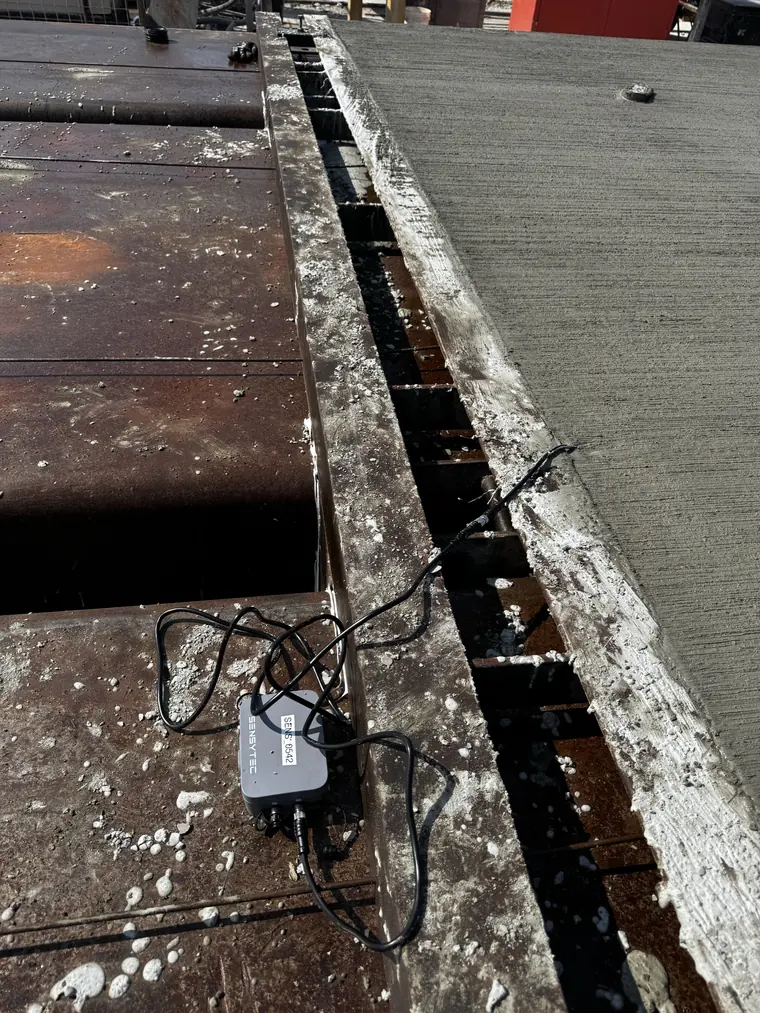
Place sensors at locations selected for the trial and record their relationship to the bed, member and mix. Temperature history provides evidence about curing conditions. A strength estimate also needs an appropriate mix-specific calibration.
During a site survey, confirm coverage, gateway location, power and how the team handles missing readings.
03Compare the estimatePublished NAPCO example
How does the estimate compare with cylinder results?
These are the three comparison points published for the February 17, 2026 NAPCO Double-T demonstration. A maturity-based estimate and a compression test are different measurements; preserve both in the review.
Three observations from one demonstration do not establish accuracy for every mix, plant or project. They do not by themselves establish authorization to release a member.
Swipe across the table to see all columns.
| Time after pour | Cylinder average (psi) | Estimated strength (psi) | Difference (%) |
|---|---|---|---|
| 5h 43m | 2,177 | 2,026 | −6.9 |
| 7h 43m | 3,968 | 3,609 | −9.0 |
| 9h 43m | 4,431 | 4,550 | +2.7 |
Difference = (estimate − cylinder average) ÷ cylinder average × 100. Values are rounded as published. No intermediate readings are shown or inferred.
Read the original NAPCO case study ↗04Follow the cylinderSensyCure
How were the companion cylinders cured?
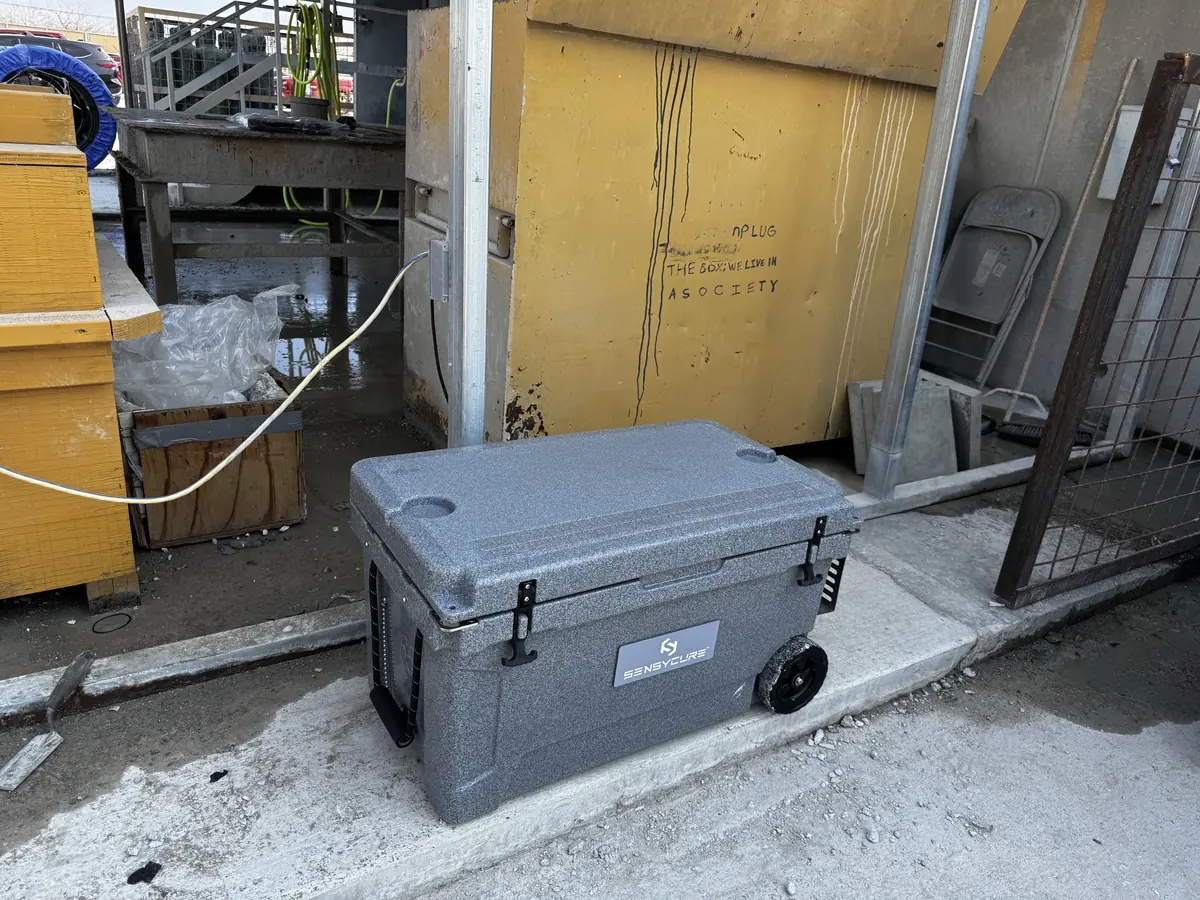
Match curing aims to make companion-cylinder curing follow the member’s temperature history. Record cylinder identification, curing setup, probe placement and break results so the reviewer can interpret the comparison.
A trial should document temperature tracking and deviations. A temperature-tracking result is not a universal guarantee of cylinder strength or project acceptance.
05Assemble the recordSensyHub QC evaluation
Can the reviewer trace the evidence?
Evaluate the QC workflow against the records your plant actually needs. Ask to see the current SensyHub QC application using an agreed example, including how information is entered, reviewed and exported.
Confirm report fields, permissions, retention, export formats and integration scope in the proposed configuration.
RECORDS TO VERIFY IN A PRODUCT DEMONSTRATION
- Bed, member, mix and drawing references
- Sensor locations and temperature history
- Calibration basis and estimated strength
- Cylinder curing conditions and test results
- Inspection findings, exceptions and review history
This checklist is a buying guide, not a generated customer record or a promise that every field is included in every configuration.
06Review the decisionAuthorized plant personnel
What supports the next production step?
The plant’s approved procedure determines how evidence is evaluated and who authorizes stripping, detensioning or handling. Monitoring can help organize that review and schedule tests. It does not replace the required tests or approval.
Compare actual cycle times, test timing, data gaps and staff effort with the baseline. Record what changed and what remained constrained by the plant’s process.
BEFORE THE NEXT PRODUCTION STEP
Review evidence.
Resolve exceptions.
Record authorization.
No release authorization is issued by this walkthrough.
NEXT STEP
Bring your plant’s questions to the trial.
Use a blank evaluation worksheet, review the published evidence and agree on success criteria before choosing a configuration.
Workflow questions
Is this a live SensyHub demonstration?
No. This is an educational website walkthrough. It combines a proposed evaluation process with three values from the published NAPCO case study. Request a product demonstration to inspect the current application and available features.
Does a sensor reading authorize release?
No. The plant’s approved procedure, project requirements, required tests and authorized personnel govern release. Temperature measurements and calibrated strength estimates provide evidence for that process.
What should we prepare for a plant trial?
Identify the selected bed and member, mixture, calibration status, current testing and curing procedures, connectivity and power, responsible personnel and measurable success criteria. The plant-trial guide includes a blank planning worksheet.