- The sensor called the 3,500 psi release threshold at 7h 33m — 2.5 to 3.5 hours earlier than the plant’s 10 to 11 hour cylinder practice
- All three calibration breaks landed within the ±10% ASTM C1074 tolerance, with accuracy improving to 97.3% as the curve converged
- Both release-window predictions read conservative (−6.9% and −9.0%) — the safe direction to err for a release call
- SensyCure held the control cylinder to the beam’s thermal profile, so every break was ASTM-defensible evidence, not an ambient-cured guess
One Pour, Both Systems
On February 17, 2026, Sensytec ran a live demonstration at NAPCO Precast’s facility on a Double-T beam pour. SensyCast monitored in-place strength in the beam in real time. SensyCure cured the control cylinder to follow the beam’s thermal profile, which peaked near 130°F at 6 to 7 hours, so each scheduled break measured concrete that had lived the beam’s cure, not the ambient air’s.
That pairing is what makes the numbers below meaningful. The breaks validate the sensor, and the match-curing validates the breaks.
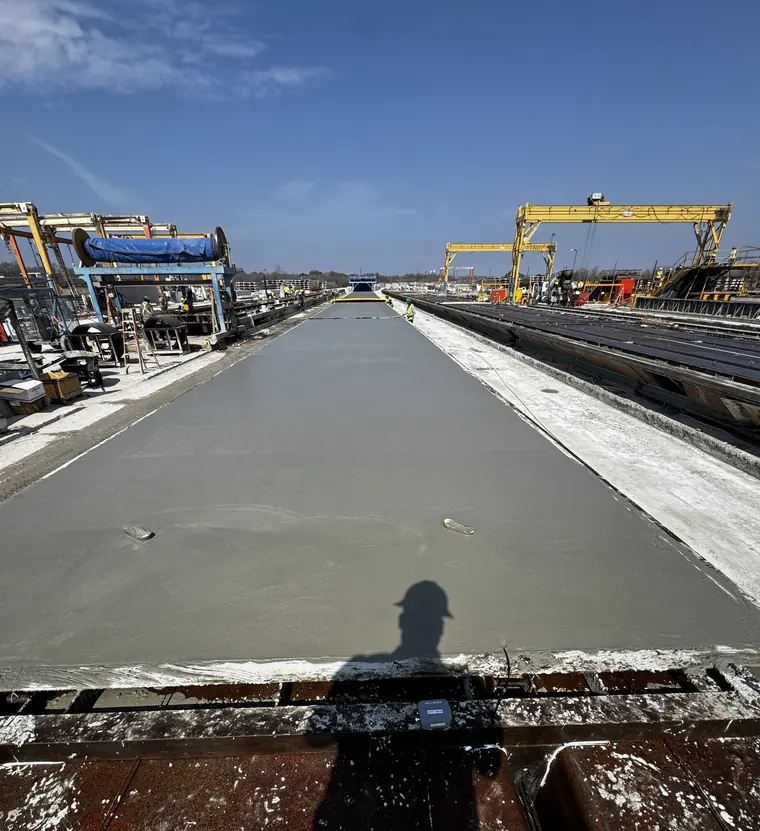
The casting bed at NAPCO Precast, screeded and left to cure.
Three Breaks, Three Checks on the Model
| Time Post-Pour | Actual Avg (psi) | Predicted (psi) | Variance | Accuracy |
|---|---|---|---|---|
| 5h 43m (Break 1) | 2,177 | 2,026 | −6.9% | 93.1% |
| 7h 43m (Break 2) | 3,968 | 3,609 | −9.0% | 91.0% |
| 9h 43m (Break 3) | 4,431 | 4,550 | +2.7% | 97.3% |
All predictions within the ±10% ASTM C1074 industry tolerance. Accuracy improved as the calibration curve converged.
Two details in that table matter more than the averages. First, the two breaks in the release window both read low: the sensor predicted 6.9% and 9.0% less strength than the cylinders actually broke at. A conservative model is the one you want signing release calls. Second, accuracy climbed to 97.3% by Break 3 — the curve converging exactly the way ASTM C1074 says it should as break data accumulates.
The release call
The sensor flagged 3,500 psi at 7 hours 33 minutes, with the beam at 3,505 psi in place. Under the plant’s cylinder schedule, the first break that could have confirmed release was 2.5 to 3.5 hours away — hours the bed would have spent sitting on concrete that was already strong enough.
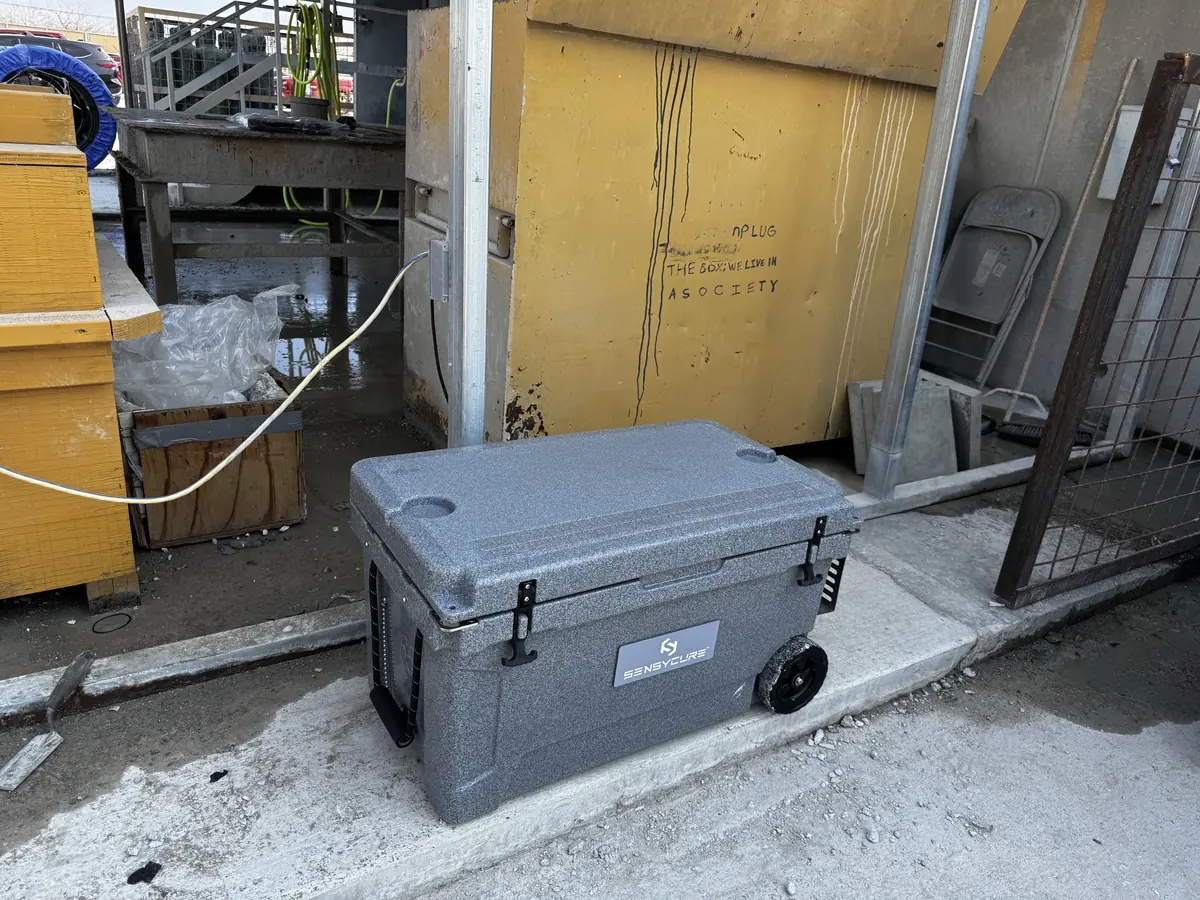
The SensyCure chamber on site, holding the control cylinder to the beam’s own cure curve.
What 2.5 to 3.5 Hours Per Pour Buys
NAPCO’s current practice breaks cylinders at 10 to 11 hours, with the cylinders cured at ambient and lab turnaround adding further delay while the bed sits idle. Recovering 2.5 to 3.5 hours on every pour compounds: the bed strips earlier, sets up earlier, and more elements ship from the same beds and the same shifts. No new formwork, no new building — the capacity was always there, hidden behind the wait for the lab.
The QC side compounds too. Once the ASTM C1074 calibration is complete, routine verification breaks drop, the release alert fires automatically at 3,500 psi, and every release decision carries a match-cured, sensor-logged data record an inspector can audit.
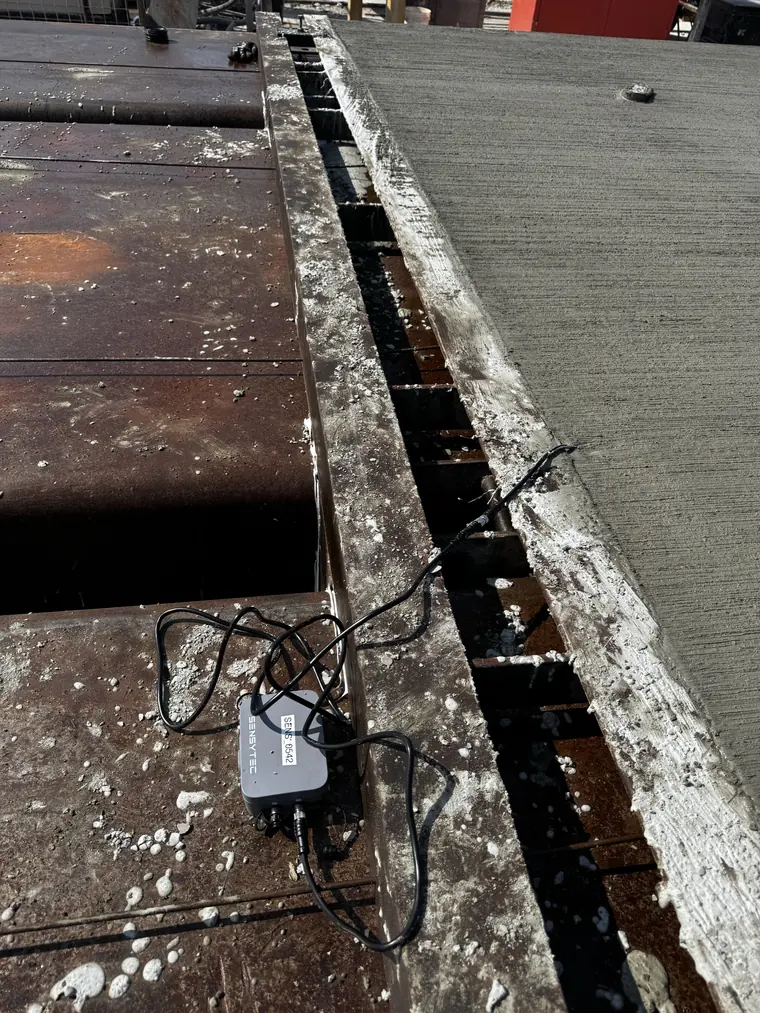
SensyCast logging in-place strength from the bed rail through the release window.
Frequently Asked Questions
How much earlier did the sensor call release than cylinder practice?
The sensor called the 3,500 psi release threshold at 7 hours 33 minutes after the pour. NAPCO's current practice breaks cylinders at 10 to 11 hours, so the call came 2.5 to 3.5 hours earlier, on a beam that was already at 3,505 psi in place.
How accurate were the sensor's strength predictions?
91 to 97% across the three calibration breaks, and every prediction fell within the ±10% tolerance ASTM C1074 allows. Accuracy improved to 97.3% at the third break as the calibration curve converged, which is exactly what the standard predicts.
Why did the cylinder breaks need SensyCure to be valid?
A cylinder cured at ambient temperature follows its own thermal history, not the beam's, so its break strength doesn't represent the member. SensyCure heated the control cylinder to follow the Double-T's cure curve, which peaked near 130°F, so every break genuinely reflected in-place conditions and the ASTM C1074 calibration was built on valid data.
What does recovering 2.5 to 3.5 hours of bed time per pour mean?
On a 10 to 11 hour release cycle, 2.5 to 3.5 hours is the difference between a bed that sits waiting on the lab and a bed that is already stripped, cleaned and set up for the next pour. More elements ship from the same beds and the same shifts, which is direct top-line capacity without new formwork.
Related Case Studies
Prove It on Your Next Pour
Run a side-by-side on your bed: your mix, your forms, your schedule. Same pour, real data.
Request a Demo